

Do I Need a Periodontist or a Hygienist?
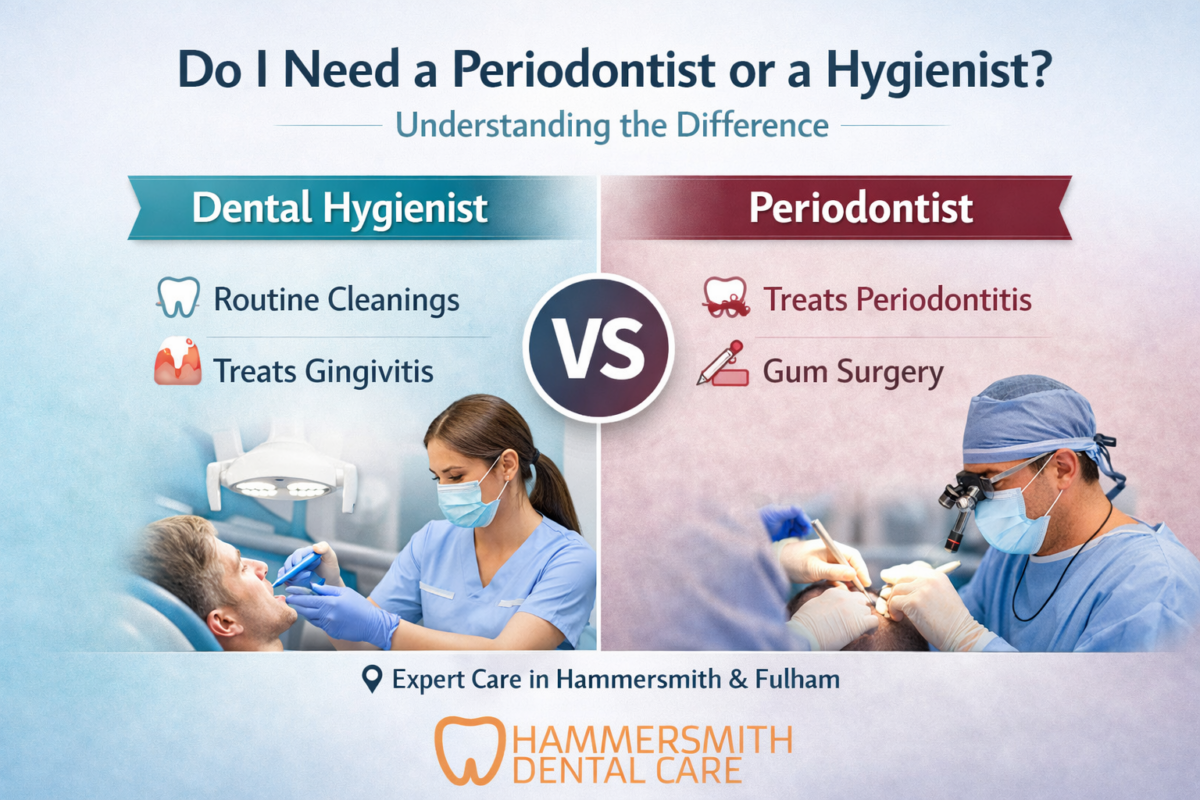
Understanding the Difference
If you’ve been told you may have gum disease, or you’re experiencing bleeding gums or bad breath, you might be wondering:
Do I need a periodontist or a hygienist?
This is one of the most common questions patients ask at Hammersmith Dental Care, and it’s also why searches such as periodontist vs hygienist, gum specialist vs hygienist, and who treats gum disease are so common online.
This guide explains the difference clearly, helping patients across Hammersmith and Fulham understand which professional is right for their gum health.
Why Understanding the Difference Matters
Gum disease often progresses silently. Many patients assume routine hygiene appointments are enough — but once gum disease becomes more advanced, specialist periodontal care may be required to prevent tooth loss and bone damage.
Knowing whether you need a hygienist or a periodontist ensures you receive the right treatment at the right time.
What Does a Dental Hygienist Do?
A dental hygienist focuses on preventing gum disease and maintaining healthy gums through regular professional care.
A hygienist can help with:
- Scale and polish treatments
- Removal of plaque and tartar above the gumline
- Managing early gum disease (gingivitis)
- Reducing bleeding gums
- Oral hygiene advice tailored to your needs
- Ongoing maintenance following periodontal treatment
Best for:
Patients with healthy gums, mild inflammation, or early-stage gum disease.
Hygiene Services (Hammersmith Dental Care)
What Does a Periodontist Do?
A periodontist is a gum specialist with advanced training in diagnosing and treating moderate to advanced gum disease (periodontitis).
At Hammersmith Dental Care, patients from Hammersmith and Fulham are referred to a periodontist when specialist care is needed to control gum disease and protect long-term oral health.
A periodontist treats:
- Advanced gum disease (periodontitis)
- Deep gum pockets
- Gum recession
- Bone loss around teeth
- Persistent gum infection
- Loose or shifting teeth
- Non-surgical and surgical periodontal treatments
Best for:
Patients with ongoing gum problems, deep pockets, or bone loss seen on X-rays.
Periodontist (Gum Specialist)
Periodontist vs Hygienist: What’s the Difference?
| Hygienist | Periodontist |
| Prevents gum disease | Treats advanced gum disease |
| Routine cleaning | Deep cleaning below the gumline |
| Treats gingivitis | Treats periodontitis |
| Maintenance care | Specialist periodontal care |
| Non-surgical | Non-surgical & surgical treatments |
Who Treats Gum Disease?
It depends on how advanced the gum disease is:
- Gingivitis (early gum disease):
→ Usually treated by a hygienist - Periodontitis (advanced gum disease):
→ Treated by a periodontist (gum specialist)
Patients often don’t realise they have periodontitis until symptoms worsen — which is why early assessment is so important.
Signs You May Need a Periodontist
You may benefit from seeing a gum specialist if you experience:
- Bleeding gums that don’t improve
- Persistent bad breath
- Receding gums
- Loose or shifting teeth
- Deep gum pockets
- Gum tenderness or swelling
- Bone loss identified on X-rays
- A history of gum disease
If you’re unsure, a professional gum assessment can determine the most appropriate care.
Do I Need Both a Hygienist and a Periodontist?
In many cases, yes.
A common treatment approach at Hammersmith Dental Care includes:
- Specialist treatment with a periodontist
- Long-term gum maintenance with a hygienist
This combined approach offers the best protection against gum disease returning.
Book the Right Gum Care
If you’re unsure whether you need a hygienist or a periodontist, our team can guide you with a comprehensive gum health assessment.
We proudly care for patients across Hammersmith and Fulham, helping them protect their gums, teeth, and long-term oral health.