

Blog

CLASSIC LIST


implant-model-1200x675.png

June 18, 2026 GuidelinesServices

If you are missing one or more teeth, dental implants can offer a secure, natural-looking and long-lasting way to restore your smile.

Dental implants are designed to replace missing tooth roots and support a crown, bridge or denture. They can help improve chewing, speech, confidence and overall quality of life.

However, implant treatment is not just about placing an implant. It requires careful planning, healthy gums, good bone support, precise placement and long-term maintenance.

That is why choosing the right implant dentist matters.

At Hammersmith Dental Care, we provide dental implant consultations and care for patients in Hammersmith, Fulham, Shepherd’s Bush, Chiswick, Kensington, Ravenscourt Park, Barons Court and across West London.

If you have been searching for dental implants in Hammersmith or dental implants near me, this guide explains why choosing a local expert can make a real difference.

What Are Dental Implants?

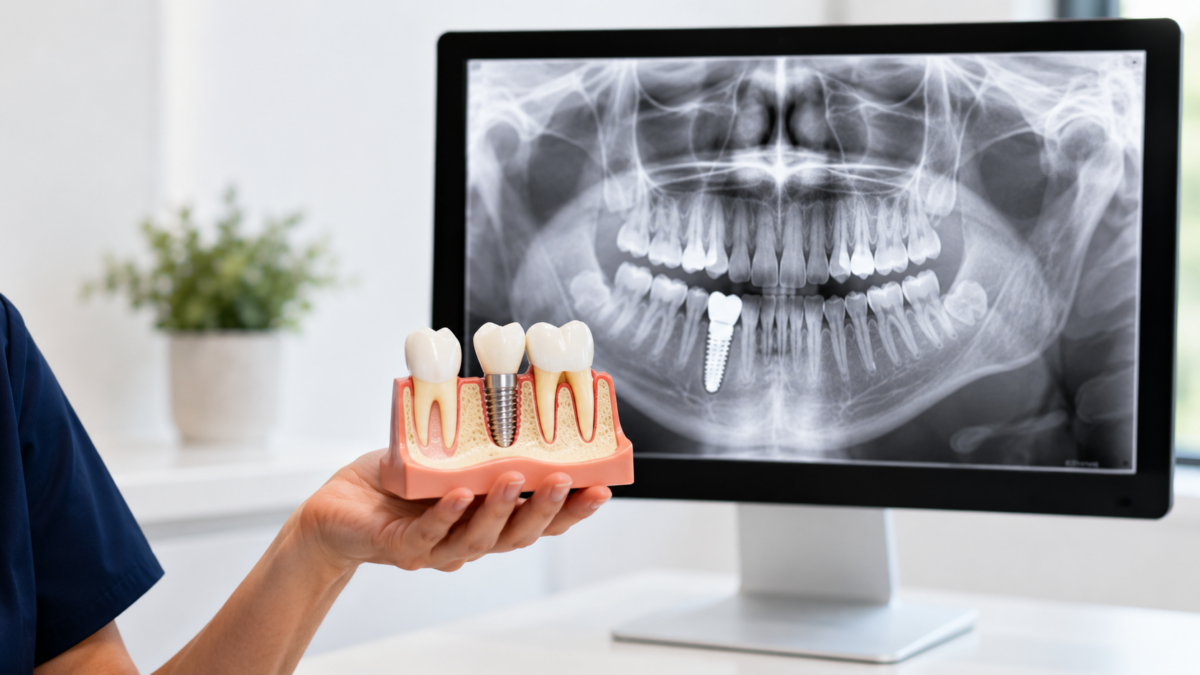
A dental implant is a small titanium post that is placed into the jawbone to act like an artificial tooth root.

Once the implant has healed and integrated with the bone, it can support a replacement tooth, such as:

  • A single crown
  • An implant bridge
  • An implant-retained denture

A complete dental implant restoration usually includes:

  • The implant, which sits in the jawbone
  • The abutment, which connects the implant to the replacement tooth
  • The crown, bridge or denture, which is the visible part of the restoration

The aim is to create a replacement tooth that looks, feels and functions as naturally as possible.

Why Consider Dental Implants?

Dental implants are often chosen because they can offer more stability than removable dentures and do not usually require neighbouring healthy teeth to be cut down, as may be needed with some traditional bridges.

Dental implants may help with:

  • Replacing a missing tooth
  • Restoring chewing ability
  • Improving smile appearance
  • Supporting facial structure
  • Preventing gaps from affecting confidence
  • Stabilising loose dentures
  • Replacing several missing teeth with an implant bridge

Every patient is different, so suitability must be assessed carefully before treatment.

Why Choosing a Local Implant Dentist Matters

Choosing a local implant dentist is about more than convenience. Dental implant treatment usually involves several stages, and ongoing aftercare is essential.

A local dental team can support you throughout the full journey, from your first consultation to long-term maintenance.

1. Easier Access to Consultations and Reviews

Dental implant treatment is usually completed over a series of appointments.

These may include:

  • Initial assessment
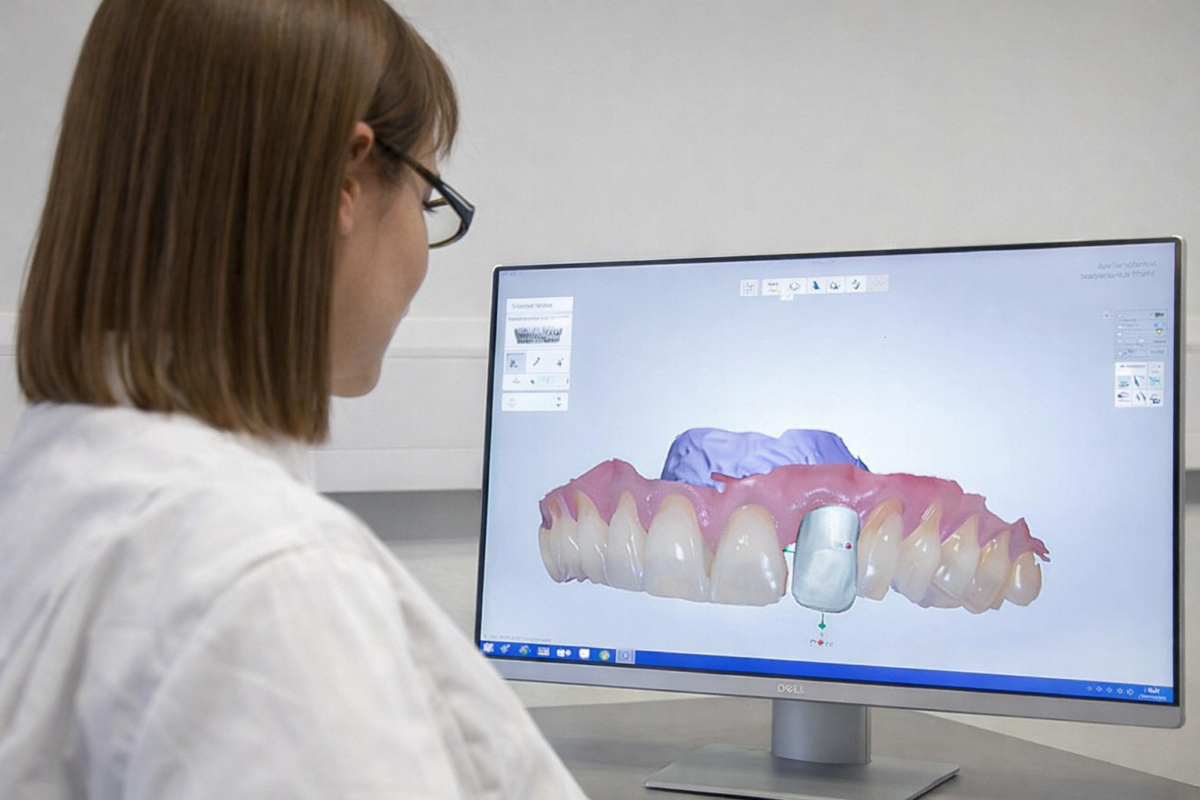
  • X-rays or scans
  • Treatment planning
  • Implant placement
  • Healing reviews
  • Crown, bridge or denture fitting
  • Maintenance appointments

Choosing an implant dentist in Hammersmith makes it easier to attend these appointments without travelling far.

This is especially helpful if you live or work locally in Hammersmith, Fulham, Shepherd’s Bush, Chiswick, Kensington or West London.

2. Better Long-Term Aftercare

Dental implants require ongoing care. They cannot decay like natural teeth, but the gum and bone around them can still become inflamed or infected if plaque builds up.

Regular dental and hygiene visits help protect the tissues around your implant.

A local implant dentist can monitor your implant, check your bite, assess gum health and advise you on cleaning techniques.

At Hammersmith Dental Care, we place strong emphasis on implant maintenance and gum health because long-term care is key to implant success.

3. Support If You Have a Problem

Although dental implants have a high success rate when planned and maintained properly, problems can still occur.

You should seek advice if you notice:

  • Bleeding around the implant
  • Swelling or redness of the gum
  • Pain when biting
  • Food trapping around the implant
  • A loose implant crown or bridge
  • A bad taste near the implant
  • Changes in how the implant feels

Having a local implant dentist means you can arrange an assessment more easily if something does not feel right.

Early advice can help prevent small problems from becoming more complex.

4. A Personalised Treatment Plan

Dental implant treatment should never be one-size-fits-all.

Before recommending implants, your dentist needs to assess:

  • Your teeth
  • Your gums
  • Your jawbone
  • Your bite
  • Your medical history
  • Your smoking status
  • Your oral hygiene
  • Your smile goals

Some patients may need additional treatment before implants, such as gum disease treatment, dental hygiene care, bone grafting or a sinus lift.

A local implant dentist can take the time to plan treatment around your needs and provide ongoing support at each stage.

5. Understanding Your Oral Health History

If you already attend a local dental practice, your team may have a better understanding of your dental history.

This can be helpful when planning implant treatment because previous gum disease, tooth loss, bite problems or dental wear can influence the treatment plan.

At Hammersmith Dental Care, we look at the whole mouth before recommending implant treatment. This helps us create a plan that supports both appearance and long-term function.

6. Convenient Hygiene and Maintenance Appointments

Implant maintenance is just as important as implant placement.

Professional hygiene care can help reduce plaque and inflammation around implants. Your hygienist can also show you how to clean around your implant crown, bridge or denture at home.

Being close to your dental practice makes it easier to keep up with regular maintenance appointments.

This is particularly important for patients with higher-risk factors such as:

  • Previous gum disease
  • Smoking
  • Diabetes
  • Bone loss
  • Difficult-to-clean implant restorations
  • Teeth grinding or clenching

Who Is Suitable for Dental Implants?

Many adults with missing teeth may be suitable for dental implants, but a full assessment is needed.

You may be suitable if you have:

  • One or more missing teeth
  • Healthy gums or gum disease that is under control
  • Enough bone to support an implant
  • Good oral hygiene
  • Realistic expectations
  • General health that supports healing

You may need additional assessment or treatment if you have:

  • Active gum disease
  • Significant bone loss
  • Heavy smoking habits
  • Poorly controlled diabetes
  • Strong teeth grinding
  • Untreated dental infections
  • Certain medical conditions or medications

Your dentist will discuss your medical and dental history before recommending implant treatment.

Why Gum Health Is Important Before Dental Implants

Healthy gums are essential for dental implant success.

Gum disease is one of the main reasons people lose teeth, and it can also increase the risk of problems around implants if not managed properly.

Before implant treatment, your dentist may recommend:

  • A gum health assessment
  • Professional hygiene treatment
  • Periodontal treatment if needed
  • Improved home cleaning techniques
  • Ongoing maintenance appointments

This helps create a healthier foundation for implant treatment.

Do You Need a Bone Graft Before Dental Implants?

Some patients do not have enough bone to support an implant, especially if the tooth has been missing for a long time.

When a tooth is lost, the jawbone in that area can gradually shrink. If there is not enough bone, your dentist may discuss bone grafting or other treatment options.

In the upper back jaw, some patients may need a sinus lift before implant placement.

A detailed assessment will help determine whether implant placement is possible and whether additional procedures are needed.

What Happens at a Dental Implant Consultation?

A dental implant consultation is the first step in understanding your options.

During your visit, your dentist may:

  • Ask about your dental concerns and goals
  • Review your medical history
  • Examine your teeth and gums
  • Assess your bite
  • Check the missing tooth area
  • Take X-rays or discuss scans if needed
  • Explain suitable treatment options
  • Discuss costs, stages and expected timelines
  • Explain aftercare and maintenance

This consultation helps determine whether dental implants are appropriate for you.

Dental Implants for One Missing Tooth

If you are missing one tooth, a single dental implant can often support a crown.

This can help restore the gap without using a removable denture. In some cases, it may also avoid the need to prepare neighbouring teeth for a traditional bridge.

A single implant crown is designed to blend with the surrounding teeth for a natural-looking result.

Dental Implants for Several Missing Teeth

If you are missing several teeth, implants can sometimes support a bridge or denture.

This may reduce the need for one implant per missing tooth, depending on your case.

Your dentist will assess the number of missing teeth, bone levels, bite forces and your goals before recommending the best approach.

Dental Implants for Loose Dentures

Some patients struggle with loose or uncomfortable dentures.

Implants can sometimes be used to help stabilise dentures, making them feel more secure when eating, speaking and smiling.

This can be especially helpful for patients who have lost multiple teeth and want improved comfort and confidence.

Why Dental Implant Aftercare Matters

Dental implant aftercare begins as soon as treatment starts and continues for the life of the implant.

To protect your implant, you should:

  • Brush twice daily with fluoride toothpaste
  • Clean around the implant every day
  • Use interdental brushes or floss as advised
  • Attend dental check-ups
  • See the hygienist regularly
  • Avoid smoking where possible
  • Manage diabetes and general health conditions
  • Wear a night guard if you grind your teeth, if recommended
  • Report bleeding, swelling, looseness or pain early

Implants need regular monitoring, even if they feel comfortable.

Why Choose Hammersmith Dental Care for Dental Implants?

At Hammersmith Dental Care, we understand that dental implant treatment is an important decision.

Our approach focuses on:

  • Careful assessment and planning
  • Clear explanation of your options
  • Gum health and hygiene support
  • Natural-looking results
  • Long-term implant maintenance
  • Personalised care for each patient
  • Convenient access for patients in Hammersmith and West London

We aim to help patients feel informed, confident and supported throughout their implant journey.

Dental Implants in Hammersmith and West London

If you are looking for dental implants in Hammersmith, our team can help you understand your options.

We welcome patients from:

  • Hammersmith
  • Fulham
  • Shepherd’s Bush
  • Chiswick
  • Kensington
  • Ravenscourt Park
  • Barons Court
  • West London

Whether you are missing one tooth, several teeth or struggling with loose dentures, a consultation can help you find out what may be possible.

Book a Dental Implant Consultation in Hammersmith

If you are considering dental implants, choosing a local expert can make your treatment journey easier, more personal and better supported over time.

At Hammersmith Dental Care, we can assess your teeth, gums and bone health, explain your options and help you decide whether dental implants are right for you.

Book your dental implant consultation in Hammersmith today and take the first step towards restoring your smile with confidence.

Frequently Asked Questions

Are dental implants suitable for everyone?

Dental implants are suitable for many adults with missing teeth, but not everyone is suitable straight away. Your dentist will assess your gums, bone, bite, medical history and oral hygiene before recommending treatment.

How long do dental implants last?

Dental implants can last for many years with good care. Their lifespan depends on oral hygiene, gum health, bone support, smoking, medical history and regular maintenance.

Is it better to choose a local implant dentist?

Choosing a local implant dentist can make consultations, treatment visits, reviews and long-term maintenance easier. It also means you can access support more quickly if you have concerns.

Do dental implants hurt?

Dental implant treatment is usually carried out with local anaesthetic. Some soreness, swelling or tenderness can occur afterwards, but your dentist will give you aftercare advice to support healing.

Can I have dental implants if I have gum disease?

You may still be suitable, but gum disease usually needs to be stabilised before implant treatment. Healthy gums are important for long-term implant success.

What happens if I do not have enough bone for implants?

If there is not enough bone, your dentist may discuss bone grafting, sinus lift treatment or alternative tooth replacement options.

Can dental implants replace dentures?

Dental implants can sometimes be used to support fixed teeth or stabilise dentures, depending on your bone levels, oral health and treatment goals.

How do I look after dental implants?

You should brush twice daily, clean around the implant carefully, attend regular dental check-ups and see the hygienist as advised. Smoking reduction and good gum health are also important.

Where can I get dental implants in Hammersmith?

Hammersmith Dental Care provides dental implant consultations and care for patients in Hammersmith and surrounding areas of West London.
candidate-1200x800.png

April 22, 2026 GuidelinesServices

Dental implants are widely considered the most reliable and long-lasting solution for replacing missing teeth. However, not every patient is immediately suitable for this treatment. Understanding whether you are a good candidate for dental implants helps you make informed decisions and ensures the best possible outcome.

This guide explains the key factors that determine dental implant candidates, helping answer the common question: “am I suitable for implants?”

What Are Dental Implants?

Dental implants are small titanium posts placed into the jawbone to replace missing tooth roots. They support crowns, bridges, or dentures and function just like natural teeth.

Ideal Candidates for Dental Implants

You are likely a strong candidate for dental implants if you meet the following criteria:

1. Good Overall Oral Health

Healthy gums are essential. Patients should be free from active gum disease or infections before implant placement.

2. Sufficient Jawbone Density

Adequate bone is needed to support the implant securely. If bone loss has occurred, procedures such as bone grafting may be required beforehand.

3. Non-Smoker or Willing to Quit

Smoking can significantly affect healing and increase the risk of implant failure. Patients who quit or reduce smoking have better outcomes.

4. Good General Health

Conditions such as uncontrolled diabetes or immune disorders can impact healing. A thorough medical history review is essential.

5. Commitment to Oral Hygiene

Long-term success depends on proper brushing, flossing, and regular dental visits.

Who May Need Additional Assessment?

Not all patients are excluded if they don’t meet ideal criteria. Some may still be suitable with preparatory treatment.

Patients with Bone Loss

Jawbone loss is common after missing teeth. Bone grafting or sinus lift procedures can often make implants possible.

Patients with Gum Disease

Gum disease must be treated and stabilised before implant placement. A periodontal assessment is typically recommended.

Patients with Medical Conditions

Conditions such as diabetes can be managed successfully if well-controlled. Your dentist will work closely with you to assess risks.

Risk Factors That Can Affect Implant Success

Understanding potential risks helps improve outcomes and reduce complications.

Smoking

Increases risk of infection and implant failure.

Poor Oral Hygiene

Can lead to peri-implantitis (infection around the implant).

Chronic Health Conditions

Uncontrolled systemic diseases may delay healing.

Teeth Grinding (Bruxism)

Excessive pressure can affect implant stability. A night guard may be recommended.

Am I Suitable for Implants?

The only way to determine your suitability is through a professional consultation. This typically includes:

  • Full dental examination
  • Digital X-rays or 3D scans
  • Gum health assessment
  • Medical history review

A personalised treatment plan will then be created based on your specific needs.

Benefits of Choosing Dental Implants

For suitable candidates, dental implants offer:

  • Natural appearance and function
  • Long-lasting results
  • Preservation of jawbone structure
  • Improved confidence and comfort

Dental Implants in Hammersmith & West London

If you are considering dental implants and want to know if you are a suitable candidate, a professional assessment is the first step. Early evaluation can help identify any risk factors and allow for proper planning.

Book Your Implant Consultation

If you’re asking “am I suitable for implants?”, the best next step is a comprehensive consultation. This allows your dentist to assess your oral health, discuss options, and guide you toward the most appropriate treatment.

Schedule your consultation today and take the first step toward restoring your smile with confidence.


Gum-and-implant-1200x800.png

March 22, 2026 Guidelines

If you’re considering dental implants, one factor matters more than most people realise: your gum health. Strong, healthy gums are the foundation of long-term implant success, while untreated gum disease can lead to complications—even implant failure.In this guide, we explain the link between gum disease and dental implants, how to prepare your mouth, and why a gum health check in Hammersmith is the first step to a successful treatment.

What Are Dental Implants and Why Do Gums Matter?

A dental implant is a small titanium post placed into your jawbone to act as a replacement root for a missing tooth. Over time, it fuses with the bone in a process called osseointegration, creating a stable base for a crown.

But this process doesn’t happen in isolation—your gums play a crucial supporting role.

However, implants rely on healthy gums for protection and support. Your gum tissue:

  • Forms a seal around the implant
  • Prevents bacteria from entering
  • Supports healing after surgery
  • Maintains long-term implant stability

Without healthy gums, even the best implant treatment can fail.

Gum Disease and Dental Implants: Why It’s a Risk

One of the biggest threats to implant success is gum disease (periodontal disease).

How gum disease affects implants:

  • Increases risk of peri-implantitis (infection around the implant)
  • Causes bone loss, weakening implant support
  • Slows healing after implant surgery
  • Raises the chance of implant failure

Studies show patients with untreated periodontal disease have significantly lower implant success rates.

Signs You May Need a Gum Health Check Before Implants

Before starting implant treatment, your dentist will assess your gums carefully.

Watch for these common symptoms:

  • Bleeding when brushing or flossing
  • Red, swollen, or tender gums
  • Gum recession (teeth look longer)
  • Persistent bad breath
  • Loose teeth

If you notice any of these, you may need treatment before implants.

How to Improve Gum Health Before Dental Implants

The good news is that improving your gum health can significantly increase implant success rates.

Step-by-step preparation:

  1. Gum Health Check (Periodontal Screening)

A full assessment identifies early signs of gum disease and bone loss.

  1. Professional Cleaning

Scaling and root planning remove bacteria below the gum line.

  1. Ongoing Hygiene Maintenance

Regular hygiene visits help keep gums healthy before and after implants.

Can You Get Dental Implants with Gum Disease?

Yes—but only after treatment.

  • Gingivitis (early stage) → Reversible with professional cleaning
  • Periodontitis (advanced stage) → Requires stabilisation before implants

In some cases, additional treatments such as bone grafting may be needed before implant placement.

Long-Term Implant Success Depends on Gum Care

Dental implants can last 15+ years or even a lifetime—but only with proper care.

To maintain results:

  • Brush twice daily
  • Clean between teeth (floss/interdental brushes)
  • Attend regular hygiene appointments
  • Schedule routine gum health checks

Poor gum care after implants can lead to peri-implantitis, one of the main causes of implant failure.

Dental Implants in Hammersmith: Why Gum Health Comes First

If you’re looking for dental implants in Hammersmith or West London, starting with a gum health check is essential.

At Hammersmith Dental Care, we combine:

  • Preventive periodontal care
  • Advanced implant dentistry
  • Personalised treatment planning

This ensures your gums are in the best possible condition before implant placement—maximising long-term success.

 FAQs: Gum Disease and Dental Implants

Can gum disease cause dental implant failure?

Yes. Untreated gum disease is a leading cause of implant failure due to infection and bone loss.

How do I know if my gums are healthy enough for implants?

A professional gum health check (periodontal screening) is the only reliable way to assess readiness.

How long should gums heal before implants?

This depends on the severity of gum disease, but typically ranges from a few weeks to several months after treatment.

Conclusion: Healthy Gums = Successful Implants

Your gums are the foundation of your dental implant treatment.

By addressing gum disease early and maintaining good oral hygiene, you can dramatically improve your chances of long-term implant success.


Book Your Gum Health Check in Hammersmith

Thinking about dental implants? Start with your gums.

Book your gum health check in Hammersmith today at Hammersmith Dental Care and take the first step toward a healthy, confident smile.


implant-Vs-Bridges-1200x800.png

February 28, 2026 GuidelinesUncategorized

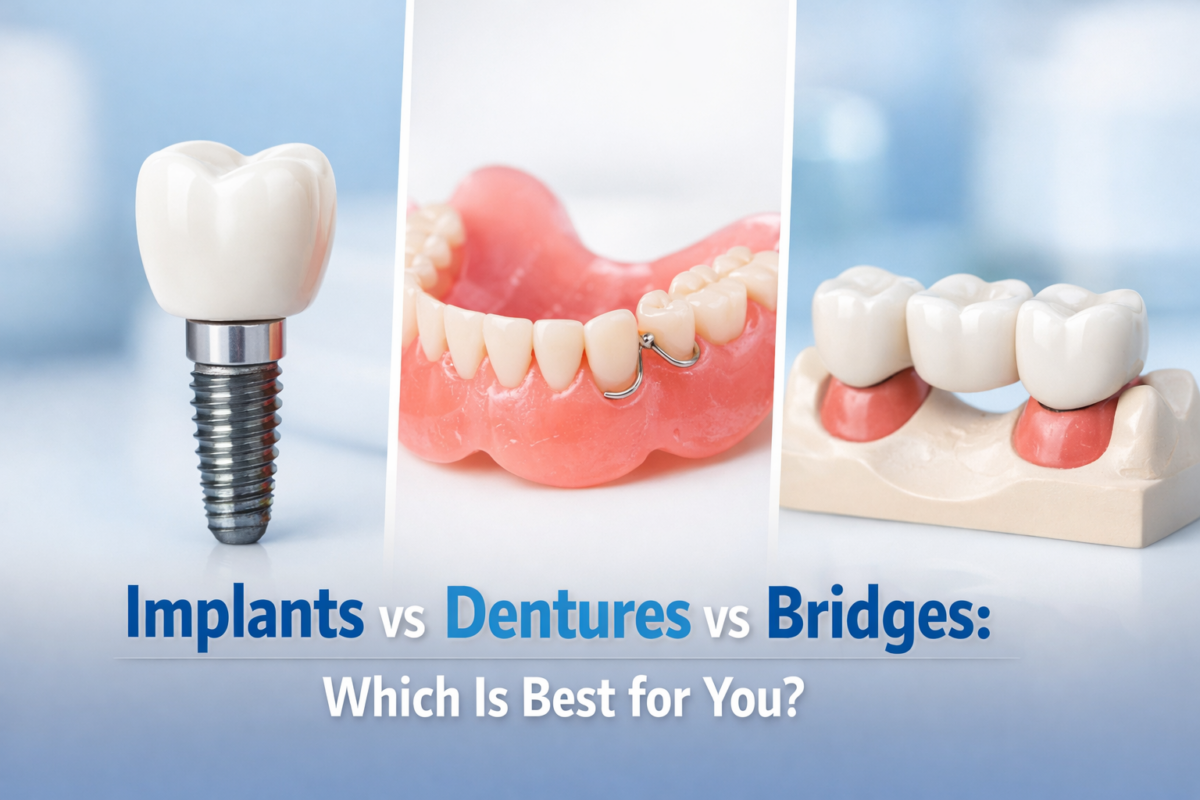
If you’re researching implants vs dentures or comparing different missing teeth solutions, you’re not alone. Replacing missing teeth is one of the most common dental concerns — and choosing the right option can feel overwhelming.

At Hammersmith Dentalcare, we help patients across Hammersmith and Fulham restore their smiles with modern, long-lasting tooth replacement treatments. In this guide, we compare dental implants, dentures, and bridges so you can make an informed decision.

Why Replacing Missing Teeth Is Important

Missing teeth are not just a cosmetic issue. They can lead to:

  • Jawbone shrinkage (bone loss)
  • Shifting of nearby teeth
  • Difficulty chewing
  • Speech problems
  • Premature facial ageing
  • Reduced confidence

The good news? Modern dentistry offers several reliable missing teeth solutions.

1- Dental Implants

What Are Dental Implants?

A dental implant is a titanium post placed into the jawbone that acts as an artificial tooth root. A crown is attached on top to create a natural-looking tooth.

Benefits of Implants

✔ Look and feel like natural teeth
✔ Prevent bone loss
✔ Do not affect neighbouring teeth
✔ Long-lasting (often 15+ years)
✔ Fixed — no removal required

Considerations

  • Higher upfront cost
  • Requires minor oral surgery
  • Healing time of several months

Best for: Patients who want the most stable, long-term solution for missing teeth.

At Hammersmith Dentalcare, implants are one of the most popular permanent solutions for replacing single or multiple missing teeth.

2- Dentures

What Are Dentures?

Dentures are removable prosthetic teeth that sit on the gums. They can replace a few teeth (partial dentures) or all teeth (full dentures).

Benefits of Dentures

✔ Lower initial cost
✔ Non-surgical option
✔ Faster treatment timeline

Considerations

  • Can feel loose over time
  • May affect speech initially
  • Do not prevent bone loss
  • Require removal and cleaning

Best for: Patients looking for a more affordable or non-surgical solution.

Modern dentures are far more natural-looking than older versions — but they still lack the stability of implants.

3- Dental Bridges

What Is a Dental Bridge?

A dental bridge uses the teeth on either side of a gap to support a false tooth in between.

Benefits of Bridges

✔ Fixed (not removable)
✔ Faster than implants
✔ More stable than dentures
✔ Natural appearance

Considerations

  • Requires filing down healthy adjacent teeth
  • Does not prevent bone loss under the missing tooth
  • Typically lasts 10–15 years

Best for: Patients who want a fixed solution but are not suitable for implants.

Implants vs Dentures vs Bridges: Quick Comparison

Feature Dental Implants Dentures Bridges
Fixed or Removable Fixed Removable Fixed
Prevent Bone Loss ✅ Yes ❌ No ❌ No
Surgery Required Yes No No
Longevity 15+ years 5–10 years 10–15 years
Natural Feel ⭐⭐⭐⭐⭐ ⭐⭐ ⭐⭐⭐⭐

When comparing implants vs dentures, implants generally provide the most natural and long-lasting result — but suitability depends on your oral health, bone levels, and budget.

Which Missing Teeth Solution Is Best for You?

The right choice depends on:

  • Number of missing teeth
  • Bone health
  • General health
  • Budget
  • Long-term goals
  • Personal preference

At Hammersmith Dentalcare, we assess your smile, take digital scans, and explain all options clearly — so you can choose with confidence.

Why Many Patients Choose Dental Implants

Although dentures and bridges remain effective solutions, dental implants are widely considered the gold standard because they:

  • Preserve jawbone structure
  • Feel like real teeth
  • Offer superior stability
  • Provide the most natural aesthetics

If you’re searching online for missing teeth solutions near me, implants are often the long-term investment patients prefer.

Book a Consultation at Hammersmith Dentalcare

Choosing between implants vs dentures vs bridges doesn’t have to be confusing.

Our experienced team at Hammersmith Dentalcare will:

✅ Explain your options clearly
✅ Provide transparent pricing
✅ Create a personalised treatment plan
✅ Help restore your confidence

Book your consultation today
Your smile deserves the best solution.


Get in touch

Contact us now

Please note that fees may vary but will be confirmed at the consultation and a written estimate will be given before treatment commences.


CONTACT

(+44) 020 8741 4777


Contact via Email

enquiries@ hammersmithdentalcare.com


Follow us

Our Activity

Join us on social media to explore innovation and empowerment.


Copyright by MoReel 2025. All rights reserved.