
A brighter smile can make a noticeable difference to your confidence. However, with so many teeth-whitening products available online, in pharmacies and on social media, deciding which option is right for you can be confusing.
Should you choose professional teeth whitening from a dentist, a dentist-prescribed home whitening system, or an over-the-counter whitening kit?
In this guide, the team at Hammersmith DentalCare compares professional teeth whitening with shop-bought home whitening kits, including their safety, effectiveness, cost and likely results.
What Causes Teeth to Become Discoloured?
Teeth can gradually become darker or stained for several reasons, including:
- Tea, coffee and red wine
- Smoking or tobacco use
- Darkly coloured foods
- Natural ageing
- Certain medicines
- Previous injury to a tooth
- Inadequate brushing and interdental cleaning
Some stains sit on the surface of the enamel, while others develop deeper within the tooth. This is why a product that works for one person may not produce the same result for someone else.
Before whitening your teeth, it is important to identify the type and cause of the discolouration.
What Is Professional Teeth Whitening?
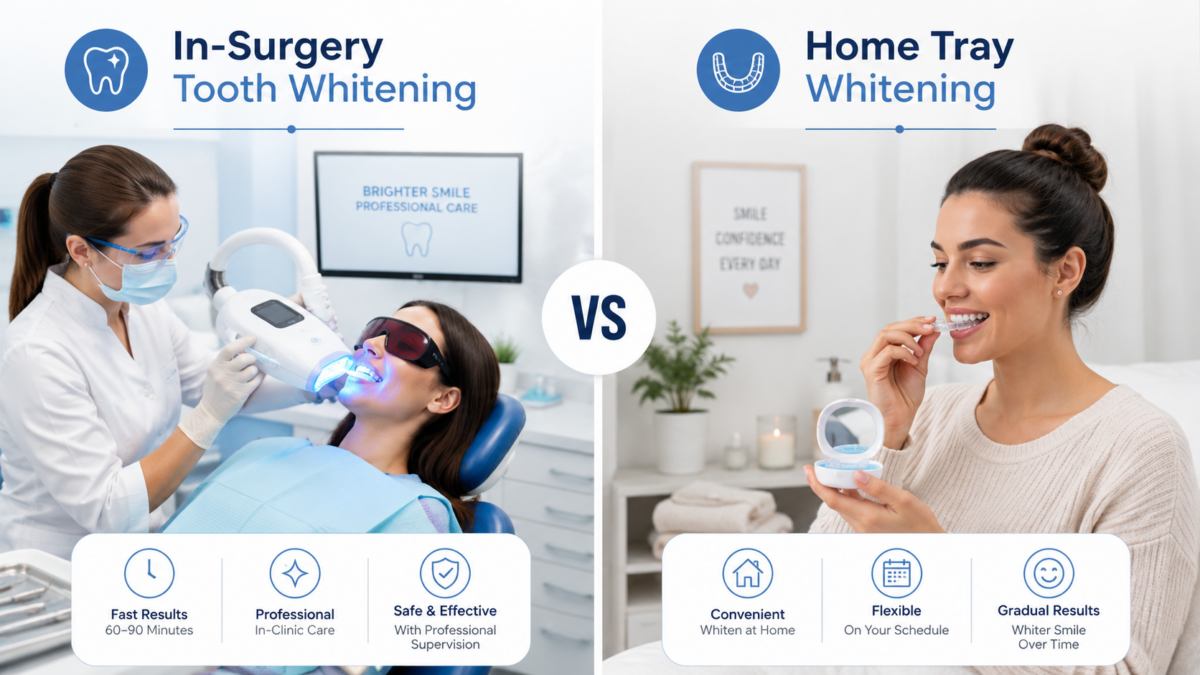
Professional teeth whitening is prescribed and supervised by a qualified dental professional.
Before treatment, your dentist examines your teeth and gums to check that whitening is appropriate. Problems such as tooth decay, gum disease, cracked teeth or leaking fillings may need to be addressed before whitening begins.
Depending on the system recommended, professional whitening may involve:
Dentist-Prescribed Home Whitening
Your dentist provides custom-made whitening trays designed to fit closely around your teeth. A professional whitening gel is placed inside the trays, which are worn at home according to your dentist’s instructions.
Treatment usually takes place gradually over a period of several weeks. The NHS states that dentist-prescribed home whitening commonly involves wearing custom trays for approximately two to six weeks.
In-Practice Teeth Whitening
Some patients may be suitable for whitening carried out in the dental practice. A whitening gel is applied to the teeth while the gums and surrounding soft tissues are carefully protected.
In-practice treatment is generally faster than whitening with gel alone at home, although the recommended option will depend on your teeth, expectations and oral health.
What Are Home Whitening Kits?
Over-the-counter home whitening products can include:
- Whitening strips
- Generic mouth trays
- Whitening pens
- LED whitening kits
- Whitening gels
- Whitening toothpastes
- Charcoal powders
These products are generally designed for use without an individual dental assessment.
Some may help reduce mild surface staining. However, the results can vary considerably, particularly when the product contains a low concentration of active whitening ingredients or does not fit securely around the teeth.
The NHS warns that whitening kits bought from pharmacies or online may not work as effectively as dentist-provided treatment and could harm the teeth or gums when used incorrectly.
Professional Whitening vs Home Whitening Kits
1. Safety
Professional whitening
A dentist examines your mouth before prescribing treatment. This helps identify decay, gum disease, exposed roots, damaged enamel and other conditions that could make whitening painful or unsuitable.
Custom-made trays can also help limit contact between the whitening gel and the gums.
Shop-bought home kits
Generic trays and whitening strips are not made specifically for your mouth. If they do not fit correctly, gel may leak onto the gums and cause irritation.
There is also a risk of overusing a product, leaving it on for too long or combining several whitening products in an attempt to accelerate the results.
Winner: Professional teeth whitening
Professional supervision provides an additional level of protection and ensures that the treatment is appropriate for your oral health.
2. Strength and Effectiveness
Professional whitening
Dentist-prescribed whitening systems use regulated products and treatment plans selected for the individual patient. They can usually address more noticeable or deeper discolouration than standard cosmetic products.
Shop-bought home kits
Over-the-counter kits may improve mild surface staining, but the results are often less dramatic or less predictable. Some products marketed as whitening treatments primarily remove surface stains rather than changing the underlying shade of the teeth.
Winner: Professional teeth whitening
For patients seeking a visible and controlled improvement, dentist-supervised whitening is generally the more predictable option.
3. Customisation
Professional whitening
The treatment can be adapted to your starting shade, sensitivity, dental history and desired outcome. Custom trays are made to fit your teeth rather than using a standard one-size-fits-all design.
Your dentist can also monitor your progress and adjust your treatment where necessary.
Shop-bought home kits
Most products provide the same instructions and application method for every customer. They cannot take account of fillings, crowns, veneers, sensitive areas or individual differences in tooth colour.
Winner: Professional teeth whitening
A personalised treatment plan is more likely to provide an even and natural-looking result.
4. Speed of Results
Professional whitening
Depending on the system used, some patients begin to notice a difference within several days. In-practice whitening may create a more immediate change, while dentist-supervised home whitening produces gradual results.
Shop-bought home kits
Results depend on the product, the concentration of its ingredients and the type of staining. Some kits require repeated use and may still produce only a subtle improvement.
Winner: Professional teeth whitening
Professionally selected treatment is normally more efficient because it is matched to the patient’s needs.
5. Tooth Sensitivity
Temporary sensitivity can occur with both professional and home whitening.
With professional treatment, your dentist can recommend ways to reduce sensitivity, such as changing how frequently you wear the trays, adjusting the amount of gel or advising an appropriate sensitivity toothpaste.
With an unsupervised kit, it may be more difficult to determine whether discomfort is a normal temporary effect or a sign of an untreated dental problem.
The NHS lists temporary sensitivity, sore gums and temporary white patches on the gums as possible side effects of teeth whitening. Patients should speak to their dentist if side effects are persistent or concerning.
Winner: Professional teeth whitening
Sensitivity cannot always be prevented, but professional guidance makes it easier to manage safely.
6. Cost
Professional whitening
Professional treatment usually costs more initially because it includes a dental examination, professional products, custom-made trays where applicable and ongoing clinical support.
Shop-bought home kits
Online and pharmacy kits often have a lower upfront price. However, patients may need to purchase several products before achieving a noticeable change, and results are not guaranteed.
Winner: Depends on your priorities
A home kit may appear cheaper, while professional whitening may provide better value for patients looking for safer, more reliable and longer-lasting results.
Can Teeth Whitening Damage Your Teeth?
When prescribed appropriately and used as directed, professional whitening is considered a conservative cosmetic dental treatment.
Problems are more likely to occur when whitening products are overused, obtained from unreliable suppliers or applied without checking the health of the teeth and gums first.
Possible side effects include:
- Temporary tooth sensitivity
- Gum irritation
- Uneven whitening
- Discomfort around cavities or exposed roots
- Irritation caused by poorly fitting trays
Never use more whitening gel than recommended or leave a product on for longer than instructed.
Is Teeth Whitening Legal at Beauty Salons?
In the UK, tooth whitening is legally considered the practice of dentistry.
The General Dental Council states that tooth whitening can only legally and safely be offered by registered dental professionals. A dentist must assess the patient and prescribe the treatment, while certain other registered dental professionals may provide whitening under the dentist’s prescription and supervision.
You should therefore avoid whitening treatments provided by beauticians, salon workers or other individuals who are not appropriately registered dental professionals.
Will Whitening Work on Crowns, Fillings and Veneers?
Whitening gel changes the shade of natural teeth. It does not whiten dental restorations such as:
- Crowns
- Veneers
- Bridges
- Composite fillings
- Dentures
This can result in a colour difference between your natural teeth and existing restorations.
If you have visible fillings, crowns or veneers, your dentist can explain whether these may need to be replaced after whitening to achieve a more consistent appearance. NHS dental guidance confirms that existing fillings and veneers will not change colour during whitening.
Who May Not Be Suitable for Teeth Whitening?
Whitening may need to be delayed or may not be recommended for people with:
- Untreated tooth decay
- Active gum disease
- Cracked or damaged teeth
- Severe tooth sensitivity
- Exposed tooth roots
- Certain types of internal discolouration
- Extensive crowns, veneers or fillings on visible teeth
Suitability during pregnancy or breastfeeding should also be discussed with your dentist.
A dental examination is the safest way to establish whether whitening is appropriate for you.
How Long Do Teeth-Whitening Results Last?
Teeth whitening is not permanent. The length of time results last varies according to your diet, oral hygiene and lifestyle.
To help maintain your smile:
- Brush twice daily with fluoride toothpaste
- Clean between your teeth every day
- Attend regular dental and hygiene appointments
- Limit staining drinks such as coffee, tea and red wine
- Rinse with water after consuming strongly coloured food or drinks
- Avoid smoking
- Follow your dentist’s instructions regarding occasional top-ups
Drinking staining beverages through a straw may reduce contact with the front teeth, although it does not replace good oral hygiene or regular dental care.
Which Whitening Option Is Best?
For mild external staining, a whitening toothpaste may provide a small improvement by helping remove surface deposits. It is unlikely to produce the same shade change as a professional whitening treatment.
For a safer, more noticeable and more predictable result, professional teeth whitening is generally the preferred option.
A dentist can determine:
- Why your teeth have changed colour
- Whether whitening will work for you
- Which whitening system is most appropriate
- How to reduce the risk of sensitivity
- Whether existing restorations will affect the final appearance
Teeth Whitening at Hammersmith Dental Care
At Hammersmith Dental Care, we take a personalised approach to cosmetic dentistry.
Before recommending teeth whitening, our dental team will assess your oral health, discuss the result you would like to achieve and explain the available treatment options. Our aim is to help you achieve a brighter smile while protecting the health of your teeth and gums.
Rather than relying on a generic online kit, you will receive professional advice and a whitening plan designed around your smile.
Book a Teeth-Whitening Consultation in Hammersmith
Are you considering teeth whitening in Hammersmith?
Book a consultation with Hammersmith Dental Care to find out whether professional teeth whitening is suitable for you. Our team will answer your questions, assess your smile and recommend an appropriate treatment plan.
Contact Hammersmith Dental Care today to begin your journey towards a brighter, more confident smile.
Frequently Asked Questions
Is professional teeth whitening better than a home kit?
Professional whitening is normally safer and more predictable because your teeth and gums are examined before treatment. Your dentist can also provide regulated products, personalised instructions and support if sensitivity occurs.
Do shop-bought whitening kits work?
Some kits may reduce mild surface staining, but the results vary. They are unlikely to provide the same degree of customisation or professional supervision as dentist-prescribed whitening.
How quickly will I see results?
The timing depends on the whitening system and the type of discolouration. With dentist-supervised home whitening, many patients notice gradual changes during the first part of treatment, with the full course often continuing for several weeks.
Does teeth whitening hurt?
Whitening should not be painful, although some people experience temporary sensitivity or gum irritation. Tell your dentist if you already have sensitive teeth so this can be considered when planning treatment.
Can I whiten my teeth if I have fillings?
You may still be able to whiten your natural teeth, but fillings, crowns and veneers will not change colour. Your dentist can assess how this may affect the final result.
Is teeth whitening safe for enamel?
Dentist-supervised whitening is designed to lighten the teeth without removing enamel. Treatment must be used exactly as directed to minimise sensitivity and gum irritation.