

Blog

CLASSIC LIST


sinus-1200x800.png

Missing teeth can lead to more than cosmetic concerns. Over time, the jawbone naturally shrinks when teeth are lost, making it difficult to place dental implants successfully. Fortunately, modern procedures such as bone graft dental implant treatment and sinus lift surgery can rebuild lost bone and prepare the mouth for long-lasting dental implants.

At Hammersmith Dental Care, we help patients restore their smiles with advanced implant dentistry and personalised treatment planning.

Why Bone Is Important for Dental Implants

Dental implants are designed to replace missing tooth roots. To remain stable, implants must be securely anchored into healthy jawbone. When there is insufficient bone volume or density, the implant may not integrate properly.

Bone loss commonly occurs because of:

  • Missing teeth
  • Gum disease
  • Dental infections
  • Facial trauma
  • Long-term denture use
  • Natural bone shrinkage over time

Before recommending implants, your dentist will carry out a detailed examination using digital imaging and 3D scans to evaluate bone levels.

What Is a Bone Graft for Dental Implants?

A bone graft dental implant procedure rebuilds areas of weakened or lost jawbone. Bone grafting helps create a stronger and more stable foundation for dental implants.

During the procedure, bone graft material is placed into the affected area. Over time, the body naturally integrates the material and generates new bone tissue.

Types of Bone Grafts Used in Implant Dentistry

At Hammersmith Dental Care, different grafting materials may be recommended depending on the patient’s needs:

Autograft

Bone taken from the patient’s own body.

Allograft

Processed donor bone material.

Xenograft

Bone graft material sourced from animal tissue.

Synthetic Bone Grafts

Artificial biocompatible materials designed to stimulate bone growth.

When Is Bone Grafting Needed?

Bone grafting may be recommended if:

  • The jawbone is too thin for implants
  • Bone loss has occurred after tooth extraction
  • Gum disease has damaged the jawbone
  • The upper jaw lacks sufficient bone height
  • Immediate implant placement is not possible

In some cases, minor grafting can be completed during implant surgery. Larger grafts may require several months of healing before implants are placed.

What Is Sinus Lift Surgery?

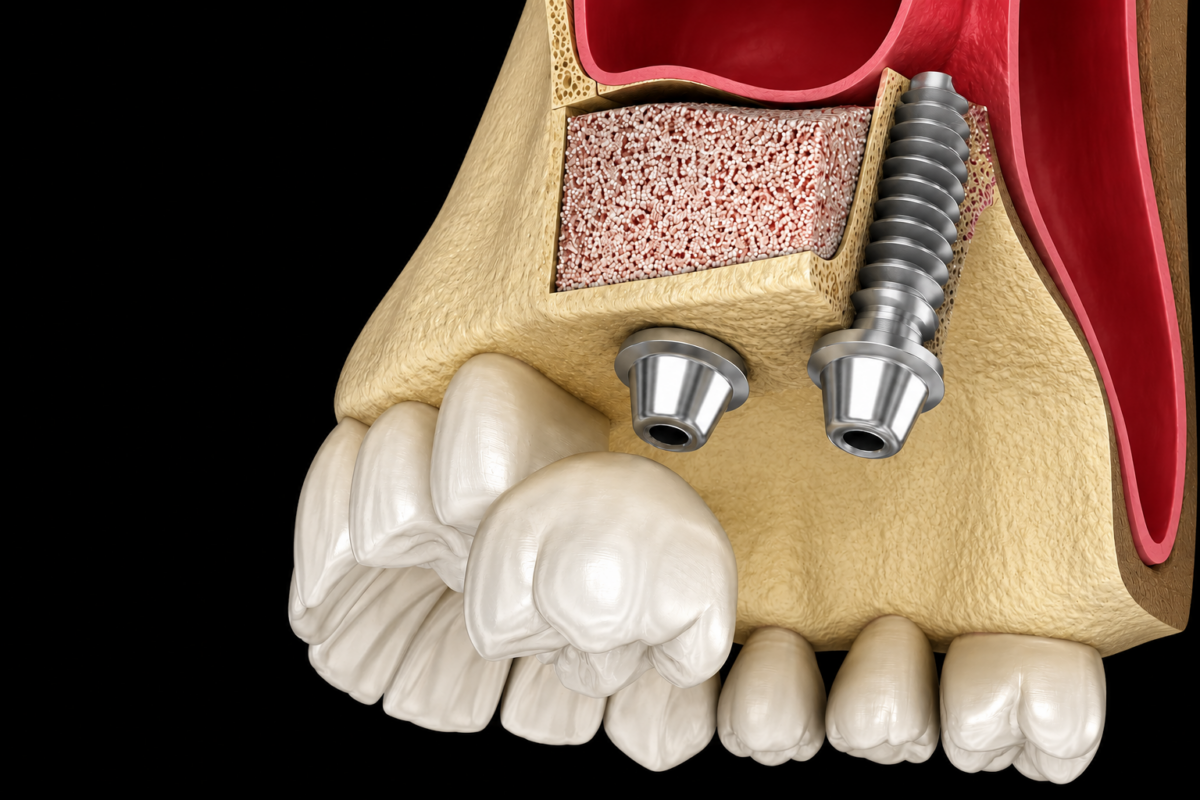
Sinus lift surgery is a specialised bone grafting procedure used in the upper back jaw. It is commonly required when patients do not have enough bone beneath the sinus cavity to support implants.

The procedure gently lifts the sinus membrane and adds bone graft material to increase bone height.

This treatment is especially common for patients missing upper molars or premolars.

Why Patients Need Sinus Lift Surgery

A sinus lift may be recommended when:

  • Bone loss has occurred in the upper jaw
  • The sinus cavity is too close to the implant site
  • Teeth have been missing for many years
  • The upper jaw lacks sufficient density for implants

Without enough bone, implants placed in the upper jaw may fail or interfere with the sinus cavity.

How Sinus Lift Surgery Works

The sinus lift procedure generally involves:

  1. Creating a small opening in the upper jaw
  2. Carefully lifting the sinus membrane
  3. Adding bone graft material beneath the sinus
  4. Closing the area to allow healing

Over several months, new bone develops, creating a secure foundation for implants.

Recovery After Bone Grafting or Sinus Lift Surgery

Recovery is usually straightforward, although healing times vary depending on the extent of treatment.

Patients are typically advised to:

  • Avoid smoking
  • Eat soft foods temporarily
  • Maintain good oral hygiene
  • Avoid blowing the nose after sinus lift surgery
  • Attend follow-up appointments

Most patients experience only mild swelling or discomfort, which can be managed with medication.

Benefits of Bone Grafting Before Dental Implants

Bone grafting and sinus lift surgery provide several important advantages:

  • Improve dental implant stability
  • Restore lost jawbone volume
  • Support long-term implant success
  • Preserve facial structure
  • Allow more patients to qualify for implants

These procedures have transformed implant dentistry, making treatment possible for patients who were once unsuitable candidates.

Why Choose Hammersmith Dental Care for Dental Implants?

At Hammersmith Dental Care, we provide comprehensive implant consultations, advanced diagnostics, and personalised treatment plans tailored to each patient.

Our experienced dental team focuses on:

  • Modern implant techniques
  • Advanced digital imaging
  • Patient comfort and safety
  • Long-term implant success
  • Clear and transparent treatment planning

We are committed to helping patients regain confidence in their smiles with high-quality restorative dentistry.

Book a Consultation

If you have been told you lack enough bone for dental implants, treatments such as a bone graft dental implant procedure or sinus lift surgery may still make implants possible.

Contact Hammersmith Dental Care today to arrange a consultation and explore your options for restoring your smile with dental implants.
implant-Vs-Bridges-1200x800.png

February 28, 2026 GuidelinesUncategorized

If you’re researching implants vs dentures or comparing different missing teeth solutions, you’re not alone. Replacing missing teeth is one of the most common dental concerns — and choosing the right option can feel overwhelming.

At Hammersmith Dentalcare, we help patients across Hammersmith and Fulham restore their smiles with modern, long-lasting tooth replacement treatments. In this guide, we compare dental implants, dentures, and bridges so you can make an informed decision.

Why Replacing Missing Teeth Is Important

Missing teeth are not just a cosmetic issue. They can lead to:

  • Jawbone shrinkage (bone loss)
  • Shifting of nearby teeth
  • Difficulty chewing
  • Speech problems
  • Premature facial ageing
  • Reduced confidence

The good news? Modern dentistry offers several reliable missing teeth solutions.

1- Dental Implants

What Are Dental Implants?

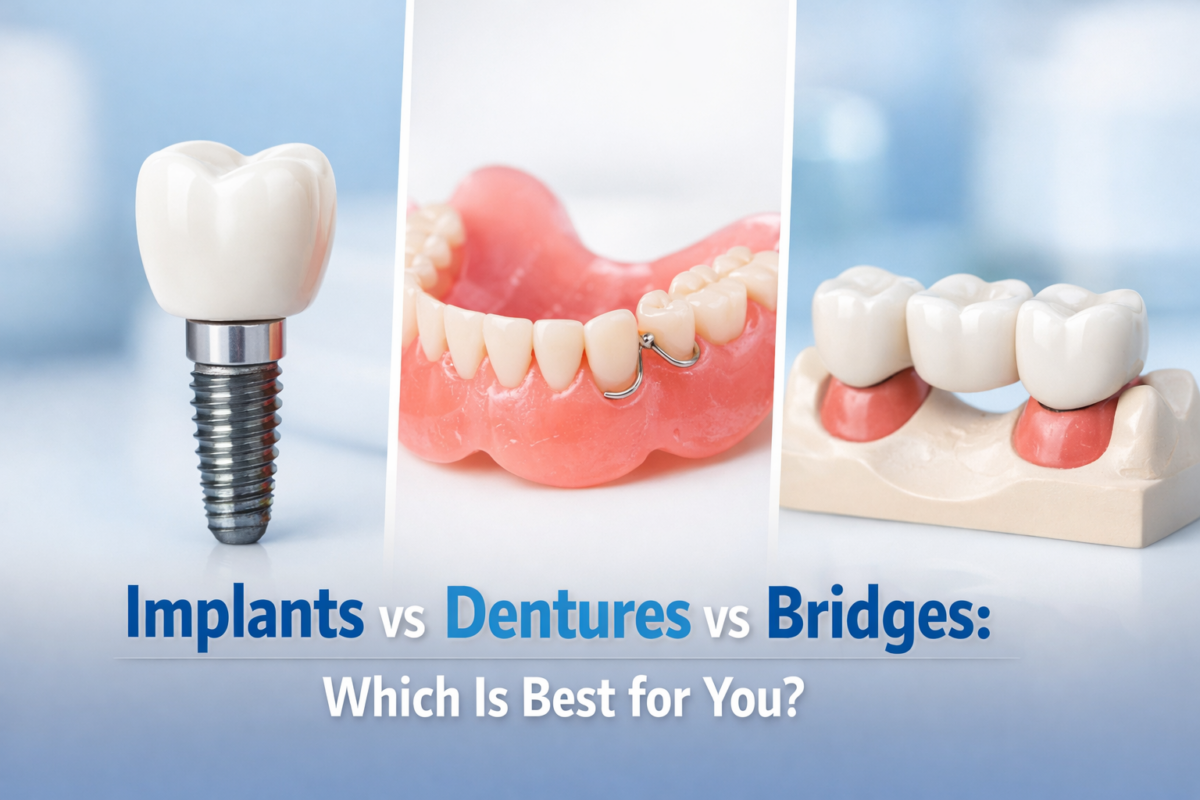
A dental implant is a titanium post placed into the jawbone that acts as an artificial tooth root. A crown is attached on top to create a natural-looking tooth.

Benefits of Implants

✔ Look and feel like natural teeth
✔ Prevent bone loss
✔ Do not affect neighbouring teeth
✔ Long-lasting (often 15+ years)
✔ Fixed — no removal required

Considerations

  • Higher upfront cost
  • Requires minor oral surgery
  • Healing time of several months

Best for: Patients who want the most stable, long-term solution for missing teeth.

At Hammersmith Dentalcare, implants are one of the most popular permanent solutions for replacing single or multiple missing teeth.

2- Dentures

What Are Dentures?

Dentures are removable prosthetic teeth that sit on the gums. They can replace a few teeth (partial dentures) or all teeth (full dentures).

Benefits of Dentures

✔ Lower initial cost
✔ Non-surgical option
✔ Faster treatment timeline

Considerations

  • Can feel loose over time
  • May affect speech initially
  • Do not prevent bone loss
  • Require removal and cleaning

Best for: Patients looking for a more affordable or non-surgical solution.

Modern dentures are far more natural-looking than older versions — but they still lack the stability of implants.

3- Dental Bridges

What Is a Dental Bridge?

A dental bridge uses the teeth on either side of a gap to support a false tooth in between.

Benefits of Bridges

✔ Fixed (not removable)
✔ Faster than implants
✔ More stable than dentures
✔ Natural appearance

Considerations

  • Requires filing down healthy adjacent teeth
  • Does not prevent bone loss under the missing tooth
  • Typically lasts 10–15 years

Best for: Patients who want a fixed solution but are not suitable for implants.

Implants vs Dentures vs Bridges: Quick Comparison

Feature Dental Implants Dentures Bridges
Fixed or Removable Fixed Removable Fixed
Prevent Bone Loss ✅ Yes ❌ No ❌ No
Surgery Required Yes No No
Longevity 15+ years 5–10 years 10–15 years
Natural Feel ⭐⭐⭐⭐⭐ ⭐⭐ ⭐⭐⭐⭐

When comparing implants vs dentures, implants generally provide the most natural and long-lasting result — but suitability depends on your oral health, bone levels, and budget.

Which Missing Teeth Solution Is Best for You?

The right choice depends on:

  • Number of missing teeth
  • Bone health
  • General health
  • Budget
  • Long-term goals
  • Personal preference

At Hammersmith Dentalcare, we assess your smile, take digital scans, and explain all options clearly — so you can choose with confidence.

Why Many Patients Choose Dental Implants

Although dentures and bridges remain effective solutions, dental implants are widely considered the gold standard because they:

  • Preserve jawbone structure
  • Feel like real teeth
  • Offer superior stability
  • Provide the most natural aesthetics

If you’re searching online for missing teeth solutions near me, implants are often the long-term investment patients prefer.

Book a Consultation at Hammersmith Dentalcare

Choosing between implants vs dentures vs bridges doesn’t have to be confusing.

Our experienced team at Hammersmith Dentalcare will:

✅ Explain your options clearly
✅ Provide transparent pricing
✅ Create a personalised treatment plan
✅ Help restore your confidence

Book your consultation today
Your smile deserves the best solution.


implant-gum.png

November 27, 2025 Uncategorized

Expert care for implant patients at Hammersmith Dental Care

Healthy gums are essential for successful dental implants. However, many patients worry that gum disease will prevent them from getting implants. Fortunately, with the right treatment, most people can still restore their smile. At Hammersmith Dental Care, we specialise in helping patients with gum disease, gum recession, and bone loss prepare for safe and predictable implant treatment. As a result, even those with complex gum concerns can often receive implants successfully.

Why Gum Health Matters for Dental Implants

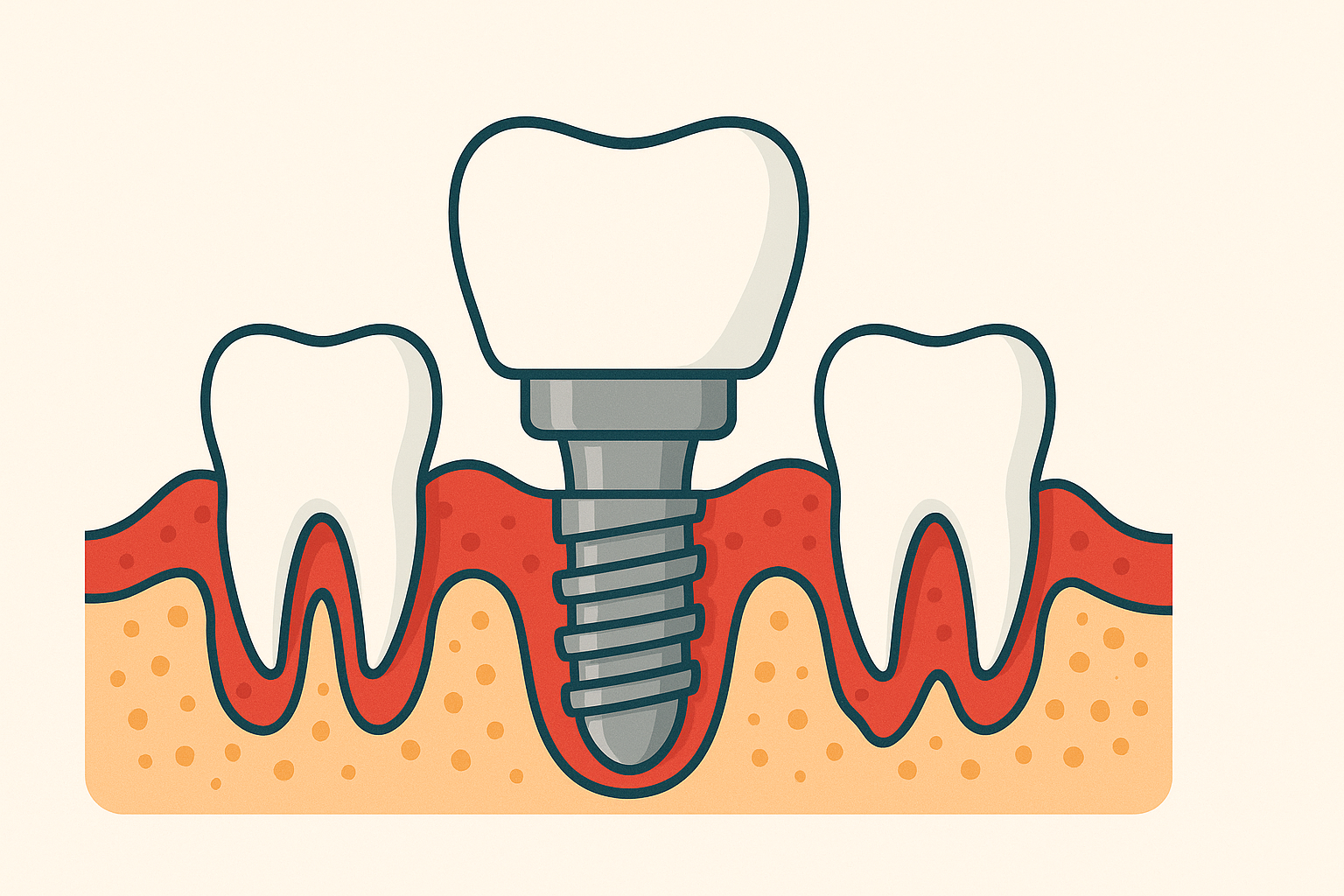
Dental implants need strong bone and healthy gum tissue to stay firmly in place. Without proper gum health, several problems may occur. For example, untreated gum disease can lead to:

  • Bone loss around the implant

  • Inflammation (peri-implantitis)

  • A higher risk of implant failure

  • Delayed healing

In fact, the American Academy of Periodontology confirms that gum disease is a major cause of tooth and bone loss — both of which are crucial for implant success. Therefore, treating gum disease before implant placement is essential.

Can You Have Dental Implants If You Have Gum Disease?

Yes — in most cases. You can still have dental implants as long as gum disease is treated first. Although gum problems may seem like a barrier, most patients can move forward once their gums have been stabilised.

At Hammersmith Dental Care, we may recommend several treatments to achieve this, such as:

  • Deep cleaning (scaling & root planing)

  • Gum infection control

  • Bone grafting where bone loss has occurred

  • Gum grafting for receding gums

  • Tailored periodontal maintenance before and after implants

Once your gums are healthy and stable, implants can be placed safely using modern, 3D-guided techniques. Consequently, your treatment becomes both more predictable and more comfortable.

Benefits of Implants for Patients With Previous Gum Problems

Dental implants offer long-term advantages, especially for patients who have experienced gum disease. For instance, implants can provide:

  • Prevention of further bone loss

  • Improved chewing function

  • Better oral hygiene and stability

  • A natural-looking, confident smile

  • Long-term reliability when gum disease is well-managed

Moreover, research shows that dental implants have high success rates even in patients with a history of periodontal disease — provided treatment is completed first. Therefore, proper preparation greatly increases the chances of long-term success.

Our Implant Process at Hammersmith Dental Care

1.Gum and Bone Assessment

First, we examine the gums, check bone levels, and identify any active infection. This ensures that we understand your oral health fully before planning treatment.

2. Periodontal Treatment

Next, we stabilise gum disease and prepare the mouth for implant placement. This step is essential for long-term implant success.

3. Precision-Guided Implant Placement

After your gums are healthy, we use 3D scanning and guided surgery to place implants with maximum accuracy and comfort.

4. Long-Term Maintenance

Finally, ongoing hygiene appointments and regular monitoring help keep your gums and implants healthy for many years.

Book Your Implant Consultation in Hammersmith

If you’re dealing with gum problems but want to replace missing teeth, we can help.
Our experienced team provides personalised care for complex gum and implant cases.


Get in touch

Contact us now

Please note that fees may vary but will be confirmed at the consultation and a written estimate will be given before treatment commences.


CONTACT

(+44) 020 8741 4777


Contact via Email

enquiries@ hammersmithdentalcare.com


Follow us

Our Activity

Join us on social media to explore innovation and empowerment.


Copyright by MoReel 2025. All rights reserved.