

Dental Implants in Hammersmith: Why Local Expertise Matters
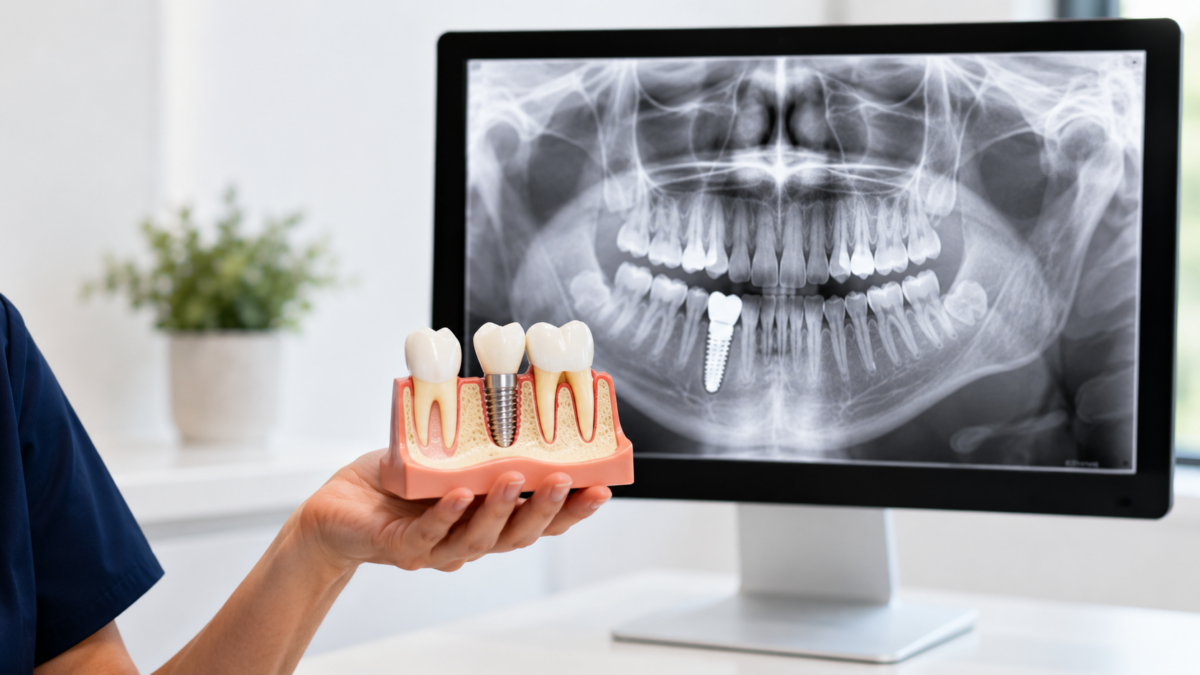
If you are missing one or more teeth, dental implants can offer a secure, natural-looking and long-lasting way to restore your smile.
Dental implants are designed to replace missing tooth roots and support a crown, bridge or denture. They can help improve chewing, speech, confidence and overall quality of life.
However, implant treatment is not just about placing an implant. It requires careful planning, healthy gums, good bone support, precise placement and long-term maintenance.
That is why choosing the right implant dentist matters.
At Hammersmith Dental Care, we provide dental implant consultations and care for patients in Hammersmith, Fulham, Shepherd’s Bush, Chiswick, Kensington, Ravenscourt Park, Barons Court and across West London.
If you have been searching for dental implants in Hammersmith or dental implants near me, this guide explains why choosing a local expert can make a real difference.
What Are Dental Implants?
A dental implant is a small titanium post that is placed into the jawbone to act like an artificial tooth root.
Once the implant has healed and integrated with the bone, it can support a replacement tooth, such as:
- A single crown
- An implant bridge
- An implant-retained denture
A complete dental implant restoration usually includes:
- The implant, which sits in the jawbone
- The abutment, which connects the implant to the replacement tooth
- The crown, bridge or denture, which is the visible part of the restoration
The aim is to create a replacement tooth that looks, feels and functions as naturally as possible.
Why Consider Dental Implants?
Dental implants are often chosen because they can offer more stability than removable dentures and do not usually require neighbouring healthy teeth to be cut down, as may be needed with some traditional bridges.
Dental implants may help with:
- Replacing a missing tooth
- Restoring chewing ability
- Improving smile appearance
- Supporting facial structure
- Preventing gaps from affecting confidence
- Stabilising loose dentures
- Replacing several missing teeth with an implant bridge
Every patient is different, so suitability must be assessed carefully before treatment.
Why Choosing a Local Implant Dentist Matters
Choosing a local implant dentist is about more than convenience. Dental implant treatment usually involves several stages, and ongoing aftercare is essential.
A local dental team can support you throughout the full journey, from your first consultation to long-term maintenance.
1. Easier Access to Consultations and Reviews
Dental implant treatment is usually completed over a series of appointments.
These may include:
- Initial assessment
- X-rays or scans
- Treatment planning
- Implant placement
- Healing reviews
- Crown, bridge or denture fitting
- Maintenance appointments
Choosing an implant dentist in Hammersmith makes it easier to attend these appointments without travelling far.
This is especially helpful if you live or work locally in Hammersmith, Fulham, Shepherd’s Bush, Chiswick, Kensington or West London.
2. Better Long-Term Aftercare
Dental implants require ongoing care. They cannot decay like natural teeth, but the gum and bone around them can still become inflamed or infected if plaque builds up.
Regular dental and hygiene visits help protect the tissues around your implant.
A local implant dentist can monitor your implant, check your bite, assess gum health and advise you on cleaning techniques.
At Hammersmith Dental Care, we place strong emphasis on implant maintenance and gum health because long-term care is key to implant success.
3. Support If You Have a Problem
Although dental implants have a high success rate when planned and maintained properly, problems can still occur.
You should seek advice if you notice:
- Bleeding around the implant
- Swelling or redness of the gum
- Pain when biting
- Food trapping around the implant
- A loose implant crown or bridge
- A bad taste near the implant
- Changes in how the implant feels
Having a local implant dentist means you can arrange an assessment more easily if something does not feel right.
Early advice can help prevent small problems from becoming more complex.
4. A Personalised Treatment Plan
Dental implant treatment should never be one-size-fits-all.
Before recommending implants, your dentist needs to assess:
- Your teeth
- Your gums
- Your jawbone
- Your bite
- Your medical history
- Your smoking status
- Your oral hygiene
- Your smile goals
Some patients may need additional treatment before implants, such as gum disease treatment, dental hygiene care, bone grafting or a sinus lift.
A local implant dentist can take the time to plan treatment around your needs and provide ongoing support at each stage.
5. Understanding Your Oral Health History
If you already attend a local dental practice, your team may have a better understanding of your dental history.
This can be helpful when planning implant treatment because previous gum disease, tooth loss, bite problems or dental wear can influence the treatment plan.
At Hammersmith Dental Care, we look at the whole mouth before recommending implant treatment. This helps us create a plan that supports both appearance and long-term function.
6. Convenient Hygiene and Maintenance Appointments
Implant maintenance is just as important as implant placement.
Professional hygiene care can help reduce plaque and inflammation around implants. Your hygienist can also show you how to clean around your implant crown, bridge or denture at home.
Being close to your dental practice makes it easier to keep up with regular maintenance appointments.
This is particularly important for patients with higher-risk factors such as:
- Previous gum disease
- Smoking
- Diabetes
- Bone loss
- Difficult-to-clean implant restorations
- Teeth grinding or clenching
Who Is Suitable for Dental Implants?
Many adults with missing teeth may be suitable for dental implants, but a full assessment is needed.
You may be suitable if you have:
- One or more missing teeth
- Healthy gums or gum disease that is under control
- Enough bone to support an implant
- Good oral hygiene
- Realistic expectations
- General health that supports healing
You may need additional assessment or treatment if you have:
- Active gum disease
- Significant bone loss
- Heavy smoking habits
- Poorly controlled diabetes
- Strong teeth grinding
- Untreated dental infections
- Certain medical conditions or medications
Your dentist will discuss your medical and dental history before recommending implant treatment.
Why Gum Health Is Important Before Dental Implants
Healthy gums are essential for dental implant success.
Gum disease is one of the main reasons people lose teeth, and it can also increase the risk of problems around implants if not managed properly.
Before implant treatment, your dentist may recommend:
- A gum health assessment
- Professional hygiene treatment
- Periodontal treatment if needed
- Improved home cleaning techniques
- Ongoing maintenance appointments
This helps create a healthier foundation for implant treatment.
Do You Need a Bone Graft Before Dental Implants?
Some patients do not have enough bone to support an implant, especially if the tooth has been missing for a long time.
When a tooth is lost, the jawbone in that area can gradually shrink. If there is not enough bone, your dentist may discuss bone grafting or other treatment options.
In the upper back jaw, some patients may need a sinus lift before implant placement.
A detailed assessment will help determine whether implant placement is possible and whether additional procedures are needed.
What Happens at a Dental Implant Consultation?
A dental implant consultation is the first step in understanding your options.
During your visit, your dentist may:
- Ask about your dental concerns and goals
- Review your medical history
- Examine your teeth and gums
- Assess your bite
- Check the missing tooth area
- Take X-rays or discuss scans if needed
- Explain suitable treatment options
- Discuss costs, stages and expected timelines
- Explain aftercare and maintenance
This consultation helps determine whether dental implants are appropriate for you.
Dental Implants for One Missing Tooth
If you are missing one tooth, a single dental implant can often support a crown.
This can help restore the gap without using a removable denture. In some cases, it may also avoid the need to prepare neighbouring teeth for a traditional bridge.
A single implant crown is designed to blend with the surrounding teeth for a natural-looking result.
Dental Implants for Several Missing Teeth
If you are missing several teeth, implants can sometimes support a bridge or denture.
This may reduce the need for one implant per missing tooth, depending on your case.
Your dentist will assess the number of missing teeth, bone levels, bite forces and your goals before recommending the best approach.
Dental Implants for Loose Dentures
Some patients struggle with loose or uncomfortable dentures.
Implants can sometimes be used to help stabilise dentures, making them feel more secure when eating, speaking and smiling.
This can be especially helpful for patients who have lost multiple teeth and want improved comfort and confidence.
Why Dental Implant Aftercare Matters
Dental implant aftercare begins as soon as treatment starts and continues for the life of the implant.
To protect your implant, you should:
- Brush twice daily with fluoride toothpaste
- Clean around the implant every day
- Use interdental brushes or floss as advised
- Attend dental check-ups
- See the hygienist regularly
- Avoid smoking where possible
- Manage diabetes and general health conditions
- Wear a night guard if you grind your teeth, if recommended
- Report bleeding, swelling, looseness or pain early
Implants need regular monitoring, even if they feel comfortable.
Why Choose Hammersmith Dental Care for Dental Implants?
At Hammersmith Dental Care, we understand that dental implant treatment is an important decision.
Our approach focuses on:
- Careful assessment and planning
- Clear explanation of your options
- Gum health and hygiene support
- Natural-looking results
- Long-term implant maintenance
- Personalised care for each patient
- Convenient access for patients in Hammersmith and West London
We aim to help patients feel informed, confident and supported throughout their implant journey.
Dental Implants in Hammersmith and West London
If you are looking for dental implants in Hammersmith, our team can help you understand your options.
We welcome patients from:
- Hammersmith
- Fulham
- Shepherd’s Bush
- Chiswick
- Kensington
- Ravenscourt Park
- Barons Court
- West London
Whether you are missing one tooth, several teeth or struggling with loose dentures, a consultation can help you find out what may be possible.
Book a Dental Implant Consultation in Hammersmith
If you are considering dental implants, choosing a local expert can make your treatment journey easier, more personal and better supported over time.
At Hammersmith Dental Care, we can assess your teeth, gums and bone health, explain your options and help you decide whether dental implants are right for you.
Book your dental implant consultation in Hammersmith today and take the first step towards restoring your smile with confidence.
Frequently Asked Questions
Are dental implants suitable for everyone?
Dental implants are suitable for many adults with missing teeth, but not everyone is suitable straight away. Your dentist will assess your gums, bone, bite, medical history and oral hygiene before recommending treatment.
How long do dental implants last?
Dental implants can last for many years with good care. Their lifespan depends on oral hygiene, gum health, bone support, smoking, medical history and regular maintenance.
Is it better to choose a local implant dentist?
Choosing a local implant dentist can make consultations, treatment visits, reviews and long-term maintenance easier. It also means you can access support more quickly if you have concerns.
Do dental implants hurt?
Dental implant treatment is usually carried out with local anaesthetic. Some soreness, swelling or tenderness can occur afterwards, but your dentist will give you aftercare advice to support healing.
Can I have dental implants if I have gum disease?
You may still be suitable, but gum disease usually needs to be stabilised before implant treatment. Healthy gums are important for long-term implant success.
What happens if I do not have enough bone for implants?
If there is not enough bone, your dentist may discuss bone grafting, sinus lift treatment or alternative tooth replacement options.
Can dental implants replace dentures?
Dental implants can sometimes be used to support fixed teeth or stabilise dentures, depending on your bone levels, oral health and treatment goals.
How do I look after dental implants?
You should brush twice daily, clean around the implant carefully, attend regular dental check-ups and see the hygienist as advised. Smoking reduction and good gum health are also important.
Where can I get dental implants in Hammersmith?
Hammersmith Dental Care provides dental implant consultations and care for patients in Hammersmith and surrounding areas of West London.